


Buying directly from a stainless steel wire manufacturer connects your drawing with die control, drawing settings, inspection, and packing. The benefits of working directly with a manufacturer become clear when a repeat order must match an approved sample or when a tolerance changes.
For buyers evaluating Jingzhou Metal, that process connection matters more than a long catalogue.
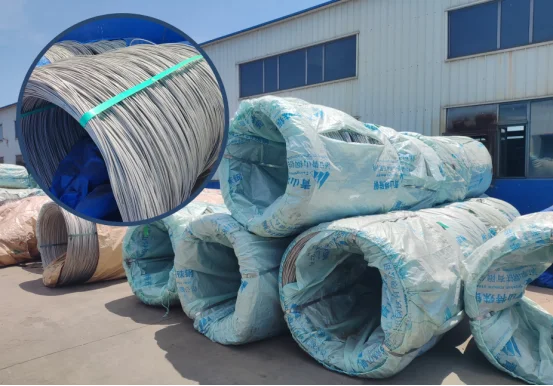
Why Does Direct Sourcing Lower Technical Risk?
A trading layer may relay an order, but technical details can lose accuracy during repeated handoffs. Direct contact keeps the drawing, process card, inspection record, and shipping requirement on one path.
One Specification Path from Drawing to Shipment
When you buy stainless steel wire direct, you can confirm grade, diameter or profile, tolerance, tensile range, cast, spool type, and packing before production. For custom stainless steel wire, a small change in die sequence can affect straightness, twist, edge condition, and forming performance.
Faster Control of Deviations and Repeat Orders
If incoming inspection finds variation, production staff can compare die condition, drawing settings, and retained records. Corrective action then addresses the actual process instead of supplying replacement stock without solving the cause.
Where Is Stainless Steel Wire Used?
Stainless steel wire applications range from industrial screens to precision components. The structure, surface, and mechanical requirement change with the application.
Filtration and Heavy-Industry Structures
Industrial stainless steel wire serves water treatment, oil and gas equipment, beverage filtration, mining screens, powder screening, and pulp-and-paper filtration.
In stainless steel wedge wire, shaped surface wires join support rods to form continuous slots. The narrow opening controls particle retention, while the widening passage reduces plugging and supports backwashing.
Precision Profiles and Light-Industry Components
Precision stainless steel wire also appears in mesh, zipper teeth, headphone parts, eyewear, watches, jewellery, medical devices, aerospace parts, orthodontics, electronics, welding products, and springs.
| Structure | Main Control | Typical Use |
| Round drawn wire | Diameter, ovality, tensile range | Mesh and precision parts |
| Profiled wire | Cross-section, edge condition, twist | Zippers and components |
| Wedge wire assembly | Profile, support rod, slot opening | Screens and filters |
| Spring wire | Tensile strength, coil set, surface defects | Formed springs |
Which Parameters Should Your RFQ Define?
Useful stainless steel wire specifications describe both the function and the acceptance method. A grade name without tolerances or test conditions leaves room for disputes.
Grade, Geometry, Mechanical Properties, and Surface Requirements
Surface finish describes the resulting condition, such as bright or matte appearance and an agreed roughness value. Surface treatment describes a process. You may request pickling, passivation, or electropolishing, then describe the supplied wire as pickled, passivated, or electropolished. These terms should not be mixed.
| Parameter | What to State |
| Alloy and standard | Grade plus ASTM, EN, or customer standard |
| Geometry | Diameter or complete profile drawing |
| Tolerance | Limits and measurement method |
| Mechanical property | Tensile range or forming requirement |
| Surface | Finish, defect limit, and treatment process |
| Delivery | Coil, spool, cast, unit weight, and packing |
How Does Manufacturer-Level Quality Control Work?
Effective stainless steel wire quality control checks the process while correction remains possible. A stainless steel wire supplier should explain test length, frequency, limits, and records.
Long-Sample Straightness and Torsion Checks
A documented inspection route checks an 0.8–1 m sample on a flat surface against a semicircular reference. Operators record diagonal inclination and straightness, with torsion limited to 30°. After straightening, the long-sample check runs again.
Drawing uses a recorded machine tension setting of 150; the source does not state a force unit, so it should remain a machine setting.
One-Hour Process Inspection and Release Records
Operators inspect appearance every hour for scratches, deformation, discoloration, flash, and missing material. Y-profile products also receive manual dimensional checks every hour. Finished coils undergo release inspection before packing or recoiling.
What Changes When You Buy Direct?
The main gain is process control, not simply a lower quoted price.
Engineering Feedback, Sampling, and Corrective Action
You can align feasibility, trial quantity, inspection method, and approval criteria before scaling custom stainless steel wire. If variation occurs, corrective action can focus on the relevant drawing stage.
Documentation, Packaging, and Commercial Terms
A complete order may include batch records, dimensional reports, mechanical results, spool orientation, labels, and protective packing. Direct discussion also clarifies tooling, MOQ, lead time, payment terms, and responsibility for specification changes.
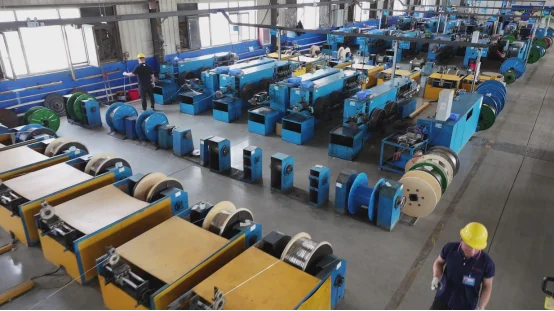
A More Practical Route from Drawing to Repeat Orders?
The strongest sourcing decision connects claimed capability with inspectable evidence. That is the practical answer to how to choose a stainless steel wire manufacturer.
Process Evidence That Supports the Application
Jingzhou Metal connects profile-wire production with long-sample straightness and torsion checks, four-hour in-process inspections, and recorded release steps.
Its stainless steel wedge wire range also links wire control with the slot structures used in industrial filtration. This is useful when profile accuracy, stable feeding, and repeatable screen openings affect your production yield.
FAQ
Q1: Is a Mill Test Certificate Enough to Approve a Batch?
A: No. Combine chemistry and mechanical certificates with dimensional results, surface criteria, traceability, and application-specific checks.
Q2: How Should Slot Size Be Specified for Wedge Wire?
A: State nominal slot size, tolerance, measurement location, profile orientation, support spacing, and retained-particle requirement.
Q3: Can One Diameter Tolerance Suit Every Application?
A: No. Mesh weaving, spring forming, welding, and precision parts require different limits.
Q4: What Should a Trial Order Prove?
A: It should confirm feeding, forming, surface integrity, dimensional capability, packing, and inspection agreement.
Q5: Why Specify Coil or Spool Packaging in the RFQ?
A: Cast, winding direction, unit weight, and protection affect pay-off stability, oxidation risk, handling, and downtime.