


Precision Filtration Engineered for Industrial Demands
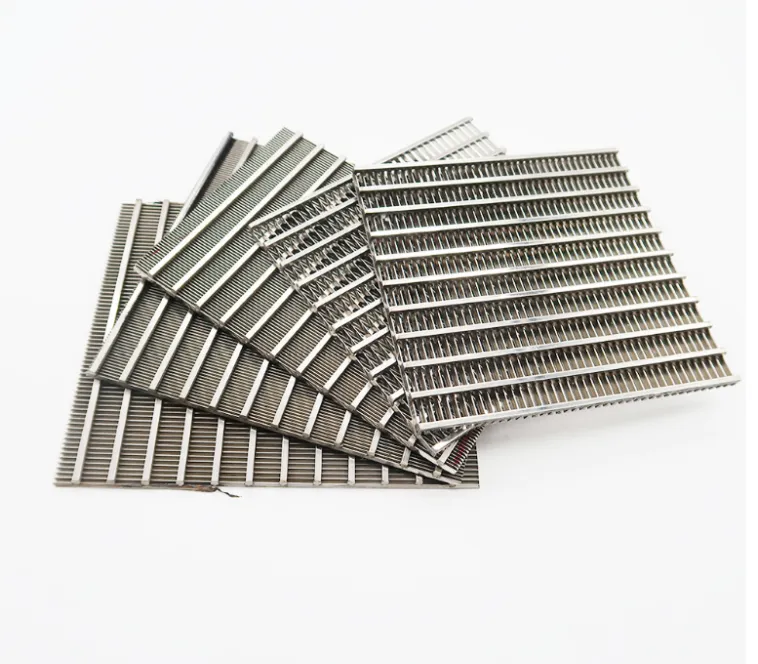
Wedge wire screens represent robust filtration components essential for critical industrial liquid-solid separation. Constructed utilizing continuous V-shaped wire profiles and highly engineered support rods, these structures facilitate optimal fluid permeation while ensuring precise particulate retention. As a dedicated manufacturing partner since 2009, Jingzhou Metal engineers these components for heavy industrial sectors, including oil and gas refineries, municipal water treatment facilities, mining dewatering operations, and sanitary beverage filtration systems.
To support global equipment manufacturers, distributors, and OEM partners demanding long-term operational stability, Jingzhou Metal maintains stringent manufacturing tolerances. Procuring the optimal filtration component requires evaluating the following engineering specifications.
Factor 1: Application-Specific Environmental Engineering
Evaluating the operational environment dictates the baseline structural requirements. Filtration components deployed in mining applications require exceptional abrasion resistance to withstand continuous heavy particulate impact. Conversely, screens integrated into brewery or beverage filtration infrastructure necessitate sanitary designs engineered for efficient clean-in-place (CIP) protocols. Water well screening systems demand a hybrid structural integrity capable of retaining fine sand while simultaneously withstanding extreme subterranean hydrostatic pressures.
Factor 2: Metallurgical Selection and Alloy Grading
Material specification directly correlates with the component’s lifecycle and corrosion resistance. Jingzhou Metal‘s standard manufacturing utilizes premium 302, 304, 304L, 316, and 316L grade stainless steel. However, environments exposed to highly concentrated acids, elevated chloride levels, or extreme thermal thresholds necessitate advanced metallurgical solutions, such as 904L, Duplex, or Super Duplex alloys. Procurement decisions must prioritize environmental compatibility and long-term asset reliability over initial capital expenditure.
Factor 3: Slot Tolerance and Micro-Filtration Ratings
The engineered slot dimension dictates the precise filtration threshold and directly influences the system’s differential pressure. Jingzhou Metal’s advanced manufacturing capabilities achieve a minimum sieve gap of 0.02 mm, providing filtration ratings ranging from 15 to 800 μm. Maintaining absolute dimensional uniformity across a slot span of 0.1 to 45 mm is critical; dimensional deviations severely disrupt predictable hydraulic flow and compromise the entire filtration matrix.
Factor 4: Hydraulic Flow Dynamics and Open Area Optimization
The proportion of open area governs the volumetric throughput capacity. Furthermore, specifying the correct flow direction—either Flow-Out-To-In (FOTI) or Flow-In-To-Out (FITO)—fundamentally alters the physical stress distribution across the screen matrix. Structural failure occurs when the specified flow dynamic misaligns with the component’s load-bearing design.
Factor 5: Profile Geometry and Structural Support Architecture
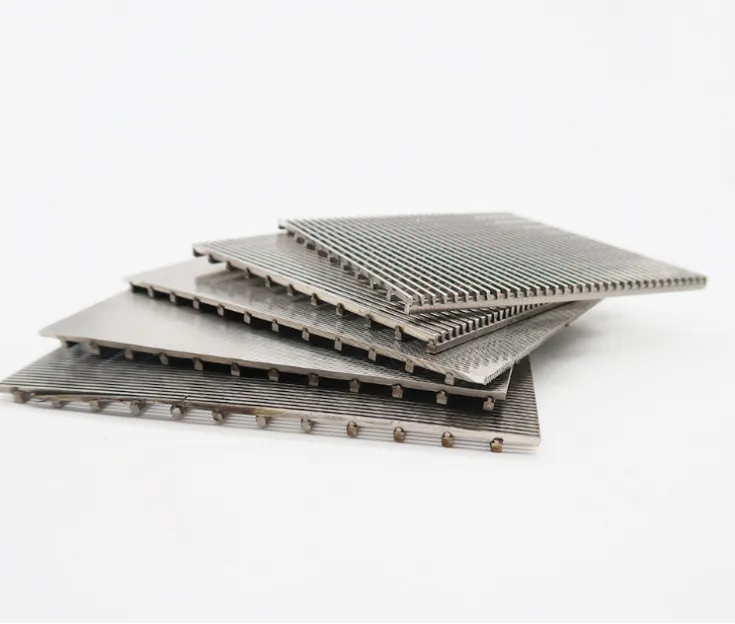
The intersection of V-shaped wire profiles and transverse support rods forms the primary load-bearing architecture. Increasing the profile depth enhances the structural threshold but inversely reduces the available open flow area. Jingzhou Metal offers highly customizable configurations with support distances ranging from 8–10 mm up to 75–80 mm, alongside specific rod specifications including 3.8 mm/22, 3.8 mm/32, 3.8 mm/48, and 3.8 mm/50 to balance throughput requirements with mechanical integrity.
Factor 6: Mechanical Integrity and Resistance Welding Standards
Tensile strength metrics validate the raw material’s durability, but the ultimate structural reliability relies on the precision of the resistance welding at each intersection. By maintaining complete vertical integration from raw wire drawing to final assembly, Jingzhou Metal deploys rigorous 2D dimensional inspections and physical pull testing. This methodology ensures that customized components structurally support the calculated maximum loads required by distinct industrial applications.
Factor 7: Surface Engineering: Finish vs. Treatment
Differentiating between mechanical finish and chemical treatment is imperative for accurate technical procurement. Surface finish quantifies the physical micro-roughness (e.g., eliminating mechanical burrs or deep abrasions) to achieve specific friction coefficients. Surface treatment refers to chemical altering processes, such as acid pickling, passivation, or electropolishing. An electropolished wedge wire screen presents significantly enhanced anti-corrosive properties compared to a merely mechanically washed screen. Detailed engineering drawings must distinctly specify both parameters.
Advanced Technical FAQ
Q1: How does Jingzhou Metal accommodate OEM/ODM requirements for custom equipment manufacturers?
A: Jingzhou Metal leverages its vertically integrated production capacity, encompassing the entire process from V-shaped wire rolling to finished screen assembly, to provide OEM/ODM support services for customized equipment manufacturers.We support customized production based on customer engineering drawings, balancing large-scale OEM bulk orders with small-batch ODM development. Prototypes can be produced quickly within 7-10 days, ensuring a smooth transition to mass production. Each order comes with complete quality inspection documentation, meeting supply chain compliance and traceability requirements..
Q2: What is the optimal method for determining the required support rod configuration?
A: The support rod specification (e.g., 3.8 mm/32) must be calculated based on the maximum anticipated differential pressure, the specific gravity of the fluid, and the chosen flow direction (FOTI/FITO). Jingzhou Metal’s technical team provides structural calculation support to ensure the selected matrix prevents mechanical deflection.
Q3: Can surface treatments compensate for inadequate metallurgical selection?
A: No. While processes like electropolishing eliminate surface contaminants and enhance the passive oxide layer, the base alloy (e.g., 304 vs. 316L) ultimately dictates the chemical resistance threshold. Proper alloy selection must always precede surface engineering decisions.
Q4: What quality assurance documentation is provided with bulk procurements?
A: Jingzhou Metal supplies comprehensive material test reports (MTRs), dimensional inspection logs (including 2D tolerance verification), and tensile strength testing certificates to ensure full compliance with international industrial manufacturing standards.