

From Operating Problem to Manufacturable Design
A custom wedge wire screen must fit your equipment and process. Therefore,slot width alone isn’t enough. Flow direction, throughput, and differential pressure matter. Particle size, temperature, and corrosion levels shape the design too. So do cleaning methods, connections, and space.
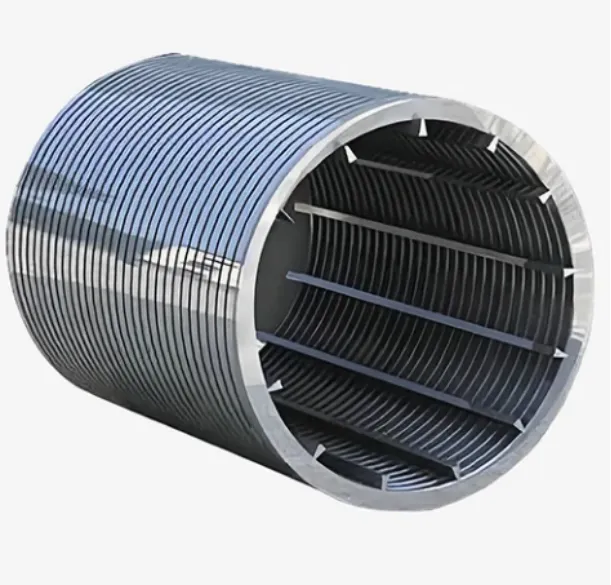
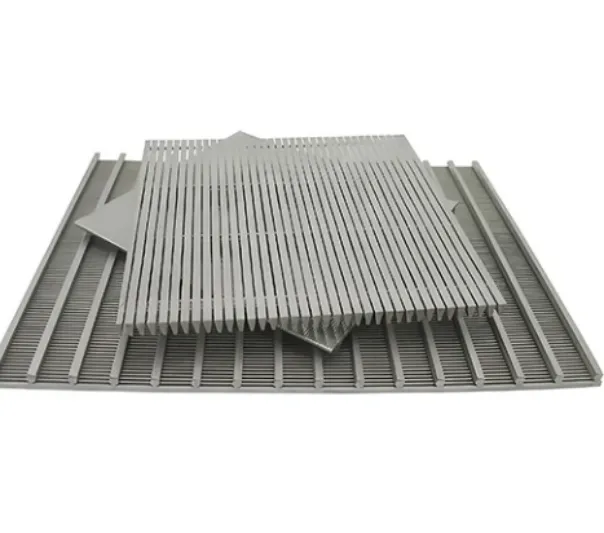
Based on this information, Jingzhou Metal uses this data to build flat panels, cylinders, baskets, sieve bends, and nozzles. Jingzhou Metal supplies these welded screen assemblies for water treatment, mining, food and beverage, pulp and paper, and oil and gas filtration industries.
Complete OEM Manufacturing Workflow for Custom Wedge Wire Screens
Step 1: Inquiry and Technical Data Collection
The customer sends a CAD drawing, specification sheet, or physical sample. Jingzhou Metal confirms the application, medium, particle size, required filtration accuracy, flow direction, pressure, temperature, dimensions, quantity, and target delivery date.
Step 2: Engineering Review and Design for Manufacture
Jingzhou Metal moves to engineering review and design-for-manufacture. Engineers verify the slot, diameter, and length. They ensure support spacing, end connections, and structural loads allow reliable production. Next, they advise on material grade, V-wire profile, and support rods. Finally, they specify open area, welding arrangements, surface treatments, and dimensional tolerances.
Step 3: Technical Proposal, Quotation, and Drawing Approval
Once the engineering review is completed, Jingzhou Metal prepares the technical proposal, quotation, and drawing confirmation.Jingzhou Metal issues a manufacturable solution and commercial quotation. Jingzhou Metal resolves dimensional conflicts before starting tooling or production. The customer approves the final drawing, specification, inspection requirements, sample terms, and order conditions.
Step 4: Tooling and Profile Development
For a new V-wire or support profile, the mold is designed, ground, tested, and corrected in-house. Jingzhou Metal states a 7-15 day new-product development cycle for customized profiles. This stage covers trial development of non-standard geometry before the sample screen is completed.
Precision Wire Manufacturing and Welding Process
Step 5: Trial Profile-Wire Production
The correct sequence is wire rod, cold drawing into round wire, first annealing, shaped rolling, second annealing, and fine drawing. This order controls internal stress, profile geometry, surface quality, and dimensional stability before welding.
Step 6: Sample Screen Fabrication
Technicians resistance-weld the approved trial wire to support rods. Depending on the drawing, the welded assembly is kept flat or formed into a cylinder, basket, curved screen, or other geometry. Frames, flanges, rings, threads, and other fittings are then added as specified.
Quality Control and Surface Treatment
Step 7: Surface Finishing and Sample Inspection
Pickling and passivation can remove weld heat tint and improve corrosion resistance; polishing or electropolishing can provide a smoother, easier-to-clean surface. Spectrometer analysis verifies alloy grade, tensile testing checks mechanical performance, infrared monitoring controls wire consistency, and 1D/2D projectors measure profile and slot dimensions.
Step 8: Sample Approval
Sample availability and charges are confirmed with the quotation. For qualifying customized quantities, the sample itself may be free, while sample freight is normally paid by the customer. Express delivery can be used for samples. Bulk production starts only after written drawing or sample approval.
Step 9: Bulk Production and In-Process Control
After sample approval, Jingzhou Metal begins bulk production and in-process control.The factory reproduces the approved material, tooling, welding program, slot specification, dimensions, fittings, and finish. Inspections are repeated during production to control slot variation, wire consistency, weld quality, and overall dimensions.
Step 10: Final Inspection, Packing, Shipment, and After-Sales Support
Jingzhou Metal checks finished screens against approved drawings and order requirements, then protected for international transport. Shipping can be arranged by express, air, road, or sea. If a confirmed quality problem occurs, return, replacement, or repair is handled according to the case.
Sampling and Delivery Information
| Project Stage | Typical Timing / Condition |
| New non-standard profile development | 7-15 days stated R&D cycle |
| Standard or available products | Generally 7-15 days; another knowledge-base reference states 7-14 days |
| Non-stock orders | Generally 10-20 days, depending on quantity |
| Fully customized screens | Confirmed after drawing review, tooling, sample approval, finishing, and quantity assessment |
Lead times are planning references rather than a universal promise. Jingzhou Metal confirms the final schedule after technical review because tooling complexity, approval speed, surface treatment, order quantity, and destination can change the production and shipping plan.
From Prototype Approval to Mass Production
Why Integrated OEM Control Matters
Wedge wire screen performance depends on the relationship between profile accuracy, slot consistency, weld strength, structure, material, and finish. Jingzhou Metal controls profile-wire development, mold maintenance, wire drawing, annealing, rolling, resistance welding, finishing, and inspection within its manufacturing system. This reduces handoff risk between separate suppliers and gives screen and filter manufacturers, equipment builders, distributors, and energy-industry customers one accountable partner from drawing review to repeat production.
FAQ
Q1: We only have an old screen or sample. Can Jingzhou Metal reproduce it?
A: Yes. Engineers can measure the sample and rebuild the specification. Customers should also provide operating conditions. Jingzhou Metal then issues a production drawing for approval before tooling and trial manufacture.
Q2: How long does customized sampling take?
A: New non-standard profile development has a stated 7-15 day R&D cycle. The complete screen-sample schedule is confirmed after reviewing tooling, material, finish, dimensions, and quantity. Existing profiles may shorten development.
Q3: How is the bulk order kept consistent with the approved sample?
A: The approved material, profile, slot, welding program, fittings, dimensions, and finish are frozen for production. In-house tooling plus spectrometer, infrared, tensile, and projector inspections reduce variation between samples and repeat orders.
Q4: What information helps prevent clogging, corrosion, or structural failure?
A: Provide the medium, particle size, chemistry, temperature, pressure, flow direction, cleaning method, and throughput. Jingzhou Metal uses these data to match the alloy, slot, open area, support structure, flow orientation, and surface treatment.