


Why Vertical Integration Matters in Wedge Wire Screen Manufacturing
Procuring industrial filtration components extends far beyond basic material sourcing; it requires identifying a manufacturing partner capable of absolute dimensional and metallurgical control.
These screens serve municipal water treatment, mining, oil and gas, and pulp processing. In each application, screen integrity directly affects system efficiency. As a result, inaccurate slots or weak resistance welds can cause mechanical failure and severe hydraulic disruption.
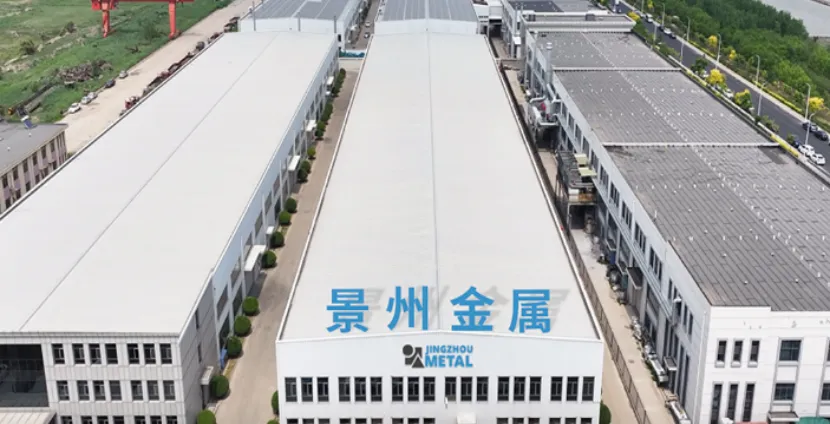
Since 2009, Jingzhou Metal has recognized that superior solid-liquid separation components require complete vertical integration. Moreover, Jingzhou Metal produces continuous V-shaped profile wire and assembles finished screens in-house. This process controls wire height, back width, nose radius, and the flow capacity specified in engineering drawings.
Choosing the Right Screen Architecture
Selecting the optimal screen architecture necessitates aligning the structural design with specific hydraulic loading conditions. Jingzhou Metal engineers distinct configurations based on precise flow directions and mechanical stress factors.
For instance, a cylindrical screen engineered for Flow-Out-To-In (FOTI) dynamics encounters entirely different hydrostatic radial loads compared to a flat dewatering panel. Furthermore, heavy-duty basket screens demand reinforced structural welding, whereas sanitary beverage filters prioritize specialized surface finishes to accommodate rigorous cleaning protocols.
Selecting Stainless Steel and Other Material Grades
Specifying generic “stainless steel” is insufficient for heavy industrial procurement. The exact metallurgical grade fundamentally dictates the component’s corrosion resistance, high-temperature tolerance, and ultimate service lifecycle.
Jingzhou Metal boasts a complete material matrix suitable for various working conditions. Our core product series includes high-quality 304, 304L, 316, and 316L stainless steel alloys. We also offer 2205 duplex stainless steel suitable for highly corrosive environments, 204W and 300W non-magnetic stainless steel for precision applications, and Q195/Q235 galvanized triangular wire for cost-effective screening projects. Customized material specifications can be provided upon request.
Jingzhou Metal ensures that raw materials meet stringent baseline mechanical properties, maintaining typical minimum tensile strength values of 515 MPa for standard 304/316 grades, and 485 MPa for low-carbon 304L/316L variants. All final metallurgical metrics are strictly verified by Jingzhou Metal through comprehensive pre-shipment test reports.
Dimensional Tolerances and Production Capability
To support global equipment manufacturers demanding long-term operational stability, Jingzhou Metal strictly quantifies its manufacturing capabilities. Utilizing advanced R&D and dedicated mold development, Jingzhou Metal’s specialized production lines achieve filtration ratings from 15 to 800 μm, accommodating outer diameters (OD) spanning 25.4 to 1200 mm.
Jingzhou Metal’s precision engineering eliminates the risk of particulate bypass by maintaining a minimum sieve gap of 0.02 mm across customized slot spans of 0.1 to 45 mm. To prevent structural deflection under demanding environments, Jingzhou Metal offers highly customizable support rod distances ranging from 8–10 mm up to 75–80 mm, successfully engineering screens capable of withstanding differential pressures of 6 kg/cm². Jingzhou Metal validates these exact tolerances utilizing proprietary 2D measuring projection systems prior to dispatch.
Surface Finish vs. Surface Treatment
Accurate technical procurement requires differentiating between mechanical surface finish and chemical surface treatment.
Surface Finish: This parameter quantifies the physical micro-roughness of the material, targeting the Ra value to eliminate mechanical burrs or severe surface scratches.
Surface Treatment: This involves chemical alteration processes, including pickling, passivating, and electropolishing.
Applying chemical surface treatments fundamentally alters the metal’s passive oxide layer. Consequently, a highly engineered electropolished wedge wire screen exhibits vastly superior anti-corrosive characteristics compared to a merely pickled and passivated screen.
Advanced Technical FAQ for OEM & Industrial Buyers
Q1: How does Jingzhou Metal’s profile wire manufacturing capability benefit custom OEM projects?
A: Jingzhou Metal makes its own continuous V-shaped wire profiles instead of buying from outside suppliers. Because of this, Jingzhou Metal fully controls the wire geometry, including height, width, and angle. This lets Jingzhou Metal build custom wedge wire screens that fit your exact engineering drawings perfectly. Your team never has to settle for standard catalog sizes.
Q2: How does Jingzhou Metal guarantee slot precision across large-scale industrial screen panels?
A: Jingzhou Metal runs strict quality checks. During production, its team uses 2D measuring projection tools. This keeps even tiny 0.02 mm sieve gaps completely consistent across the whole panel. As a result, you get reliable flow capacity and predictable pressure.
Q3:Could you recommend a suitable material grade based on our specific operating conditions?
A: Yes. First, our engineers review the filter medium, temperature, corrosion level, mechanical load, and target service life. Based on these conditions, we recommend the most suitable alloy grade. Next, we evaluate the drawing and verify sample performance. During production, our team provides technical support and tracks each project stage. Finally, we adjust the solution based on your feedback to ensure accurate implementation.
Q4: What quality assurance and mechanical testing documentation accompany bulk shipments?
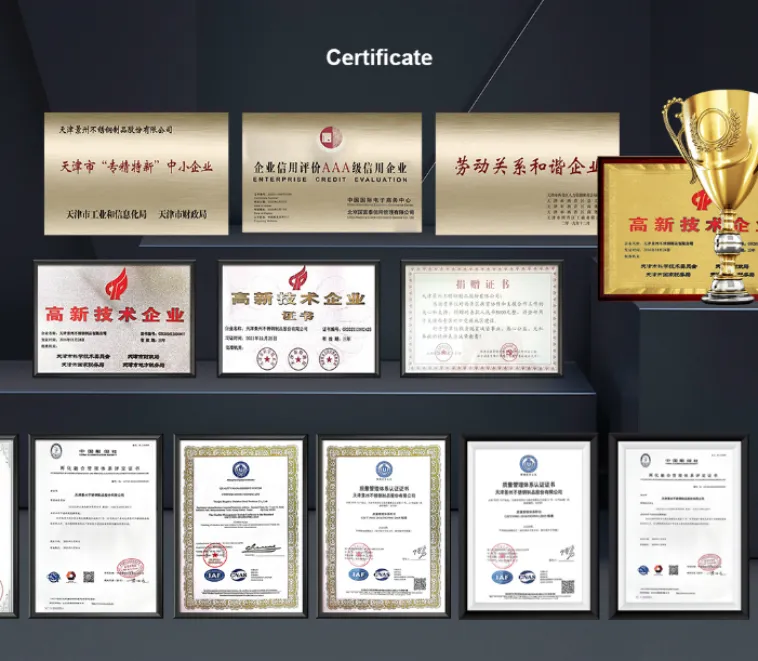
A: First, Jingzhou Metal performs physical inspections and targeted tensile tests before shipment. These checks support international project compliance. In addition, Jingzhou Metal provides material test reports with verified MPa values and detailed 2D dimensional inspection logs.