


Understanding Oil & Gas Separation Challenges
Common Issues in Separation Efficiency
Out in the field, separators never have it easy. Oil and water often come up mixed into a tight emulsion that looks more like mayonnaise than crude. Gravity alone can’t break it apart fast enough, so production slows down. Then there’s the sand and silt that rides along with the flow. That grit plugs up ordinary screens in no time, drops pressure, and forces crews to shut down for cleaning far too often. Throw in wild swings in flow rate from new wells or pump changes, and the whole separator starts acting up – oil in the water leg, water in the oil leg, nobody happy.
The Need for High-Performance Filtration
When regular screens keep failing, the problems pile up fast. A torn filter means solids head straight for the pumps and heat exchangers downstream. One bad batch of dirty fluid can scar a pump impeller or plug a catalyst bed for weeks. Plants end up spending more time fixing things than running them. That’s why operators now look for screens that simply refuse to clog and can take the salt, the acid, and the pressure without falling apart.
Advantages of Wedge Wire Technology
Structural Benefits of Wedge Wire Screens
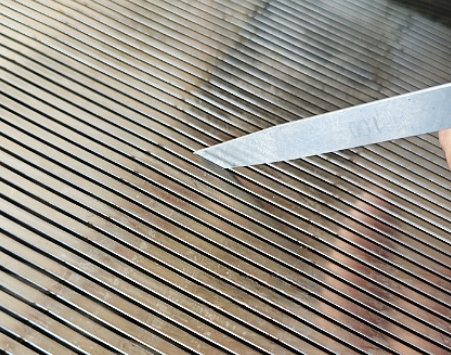
Wedge wire screens fix a lot of those headaches. The trick is the V-shaped wire wrapped tight around support rods. Because the slot gets wider toward the inside, sand hits the narrow part first and just slides off instead of wedging in. Even when the flow is thick with cuttings, the wedge wire screen keeps flowing. Slots can be cut as fine as 0.02 mm if you need to catch really small particles, yet the open area stays high enough that the pressure drop is low. Crews on rigs like that – clean oil, clean water, and no surprise shutdowns.
Material and Durability Features
Most wedge wire is made from 304 or 316L stainless steel, sometimes duplex or even higher alloys when the water is extra nasty. The V-shape itself gives the screen surprising stiffness, so it stands up to high collapse pressure inside a vessel or high burst pressure downhole. Backwash it with a quick shot of air or water, and it’s clean again. A good screen like this can run five to ten years between replacements, even in hot produced-water service full of H2S and chlorides.
Jingzhou Wedge Wire Solutions for Oil & Gas
Overview of Jingzhou’s Product Lineup
Jingzhou builds everything from flat panels to full cylinders, baskets, nozzles, and curved sieve sections. Slot size runs anywhere from 0.02 mm up to 3 mm, material usually 304 or 316L stainless steel, and they’ll tweak the support rods and end fittings however the job needs it.
Featured Product: Jingzhou Wedge Wire Screen Cylinder
The Jingzhou Wedge Wire Screen Cylinder is the one most operators pick for tough separator service. You can order slots down to 0.05 mm when the sand is fine, and the cylinder still holds together under heavy sand loads. The V-wire layout keeps the flow steady even when the produced water looks like chocolate milk. These cylinders go inside oil-water separators, sand traps, and water-polishing vessels all over the world.
Application Scenarios in the Oil & Gas Industry
Upstream Applications (Wellhead to Separator)
Down at the well, wedge wire sand screens keep formation sand out of the tubing so the ESP or rod pump doesn’t grind itself to pieces. Up at the surface, big inlet separators use wedge wire baskets to knock out the big stuff before the fluid hits the main treater.
Midstream Applications (Transport & Storage)
Before water goes back down the disposal well or out to the ocean, it has to be clean enough to pass regulations. Wedge wire panels in the final filter stage catch the last bits of oil and solids so the injection pumps stay happy.
Downstream Applications (Refining & Petrochemicals)
In the refinery, wedge wire protects catalyst beds and guard filters on hydrotreaters. One tiny slug of rust or scale can kill a whole run, so plants put Jingzhou cylinders on the feed lines and sleep better at night.
How to Select the Right Jingzhou Wedge Wire Product
Key Selection Criteria for Optimal Performance
Look first at pressure and temperature ratings, then figure out how small the particles are that you have to stop. Flow rate and vessel connections matter too. Write those numbers down, and Jingzhou will point you to the right grade and slot size.
Customization Options Available from Jingzhou
Jingzhou can cut slots from 0.02 mm to 3 mm, add flanges, threads, or weld rings, and even electro-polish the surface if you’re fighting paraffin or scale buildup.
FAQ
Q: What is a wedge wire screen used for in oil & gas?
A: Mainly to keep sand and solids out of the fluid stream in separators, water treatment units, and downhole sand control – the V-shape stops plugging dead in its tracks.
Q: How do I choose the right wedge wire screen size?
A: Look at your flow rate, the smallest particle you need to catch, and the pressure the screen will see. Jingzhou will build it to fit your vessel perfectly.
Q: Are wedge wire screens reusable?
A: Yes, the SS316L ones especially. Clean them properly and they’ll outlast carbon steel screens by years.
Q: How long do wedge wire screens typically last in oil & gas service?
A: In produced-water, separator, and sand-control applications, high-quality stainless-steel wedge wire screens usually last 5–10 years, depending on sand load, chemical exposure, and cleaning frequency.