


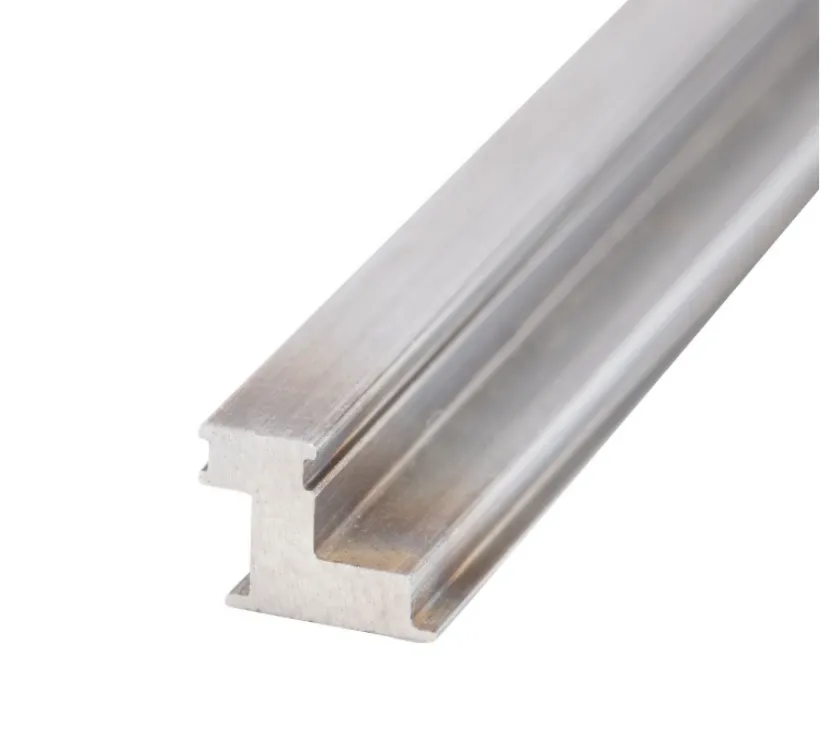
What Makes L-Shaped Guide Rail Wire Useful for Drawer Slides?
When you design a drawer slide guide rail, the real concern is not only movement. You need stable load transfer, controlled operating clearance, and repeatable guide rail fit after hundreds or thousands of opening cycles. A custom L-shaped guide rail wire gives the sliding assembly a defined bearing edge and a locating surface, which helps reduce drawer slide misalignment and batch assembly deviation.
L-Shaped Structure and Working Position
An L-shaped guide rail wire is a precision shaped wire with two functional limbs. The horizontal leg supports load-bearing contact, while the vertical leg provides lateral guidance inside the rail channel. In a side-mounted drawer slide rail, cabinet rail wire, or industrial slide rail component, this L-shaped profile wire can replace round wire or bent strip when the original part causes inconsistent sliding resistance or guide rail deformation.
Jingzhou Metal manufactures custom L-shaped guide rail wire from carbon steel and stainless steel, with a reference specification range of 0.5×1.0 mm to 5×10 mm and ±0.01 mm dimensional tolerance. For OEM projects, that tolerance matters. A small change in leg thickness can change guide groove clearance, and coating build-up may further affect track clearance.
Why Do Round Wire and Bent Strip Often Cause Sliding Problems?
A round wire creates narrow contact. A bent strip may exhibit springback after forming, resulting in dimensional deviations that affect assembly fit.Both can work in simple assemblies, but they are less stable when drawer width, dynamic load, and long travel increase at the same time.
Load, Clearance, and Alignment Risks
In drawer slide design, longer slides usually carry less load, and wider drawers can rack from side to side. Dynamic load also creates more stress than static load because the mass is moving. If operating clearance is too wide or too narrow, the rail sees extra force, which can shorten service life. This is where a carbon steel L-shaped wire or stainless steel guide rail wire can improve load capacity and smooth sliding performance through better contact geometry.
How Should You Specify Material, Surface Finish, and Surface Treatment?
Material choice should match the working environment first, then the cost target. SS304 L-shaped profile wire is common for general corrosion resistance. SS316L stainless steel guide wire suits humid or chloride-containing conditions. Zinc-plated carbon steel wire is often selected when strength and cost control are more important.
Surface Finish Is Not Surface Treatment
Surface finish refers to surface roughness, Ra value, drawing marks, and edge burr condition. Surface treatment refers to processes such as polishing, passivating, pickling, zinc-plating, phosphating, oiling, and degreasing. For sliding assemblies, polished profile wire may reduce friction, while passivated stainless steel wire supports corrosion resistance. These terms should stay separate in drawings and RFQ files.
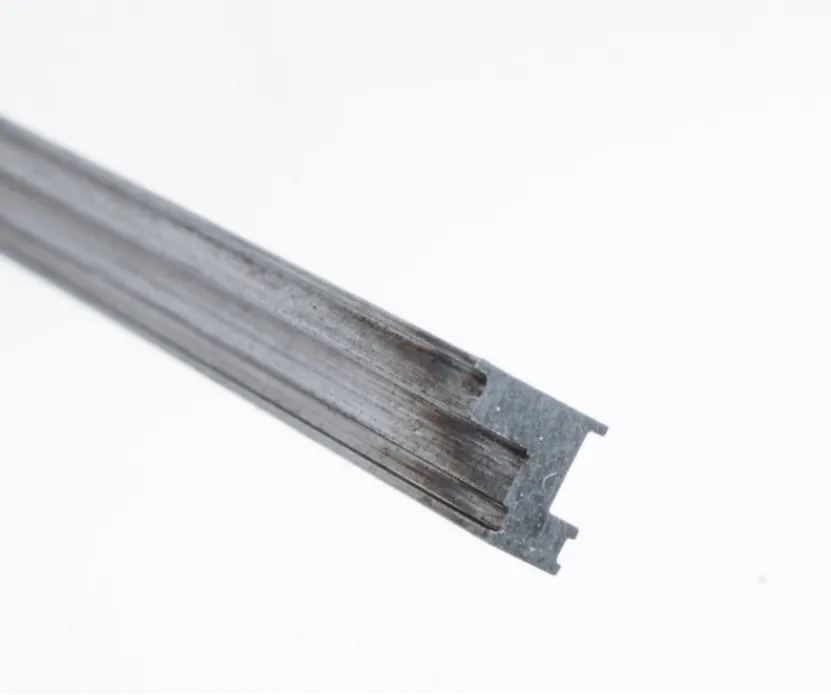
How Does Jingzhou Metal Control Custom Profile Wire Quality?
For a buyer, the concern is simple: can the next batch match the approved sample? Jingzhou Metal has focused on stainless steel wire production since 2009 and operates three production facilities covering about 18,000 m². Its shaped wire work covers stainless steel, copper, titanium, welding wire, ultra-fine wire, and wedge wire screen products. This gives drawer slide manufacturers and cabinet hardware OEMs a stronger base for custom profile tooling, sample trials, and batch consistency.
From Wire Rod to Final Inspection
A typical route includes wire rod selection, cold drawn round wire, intermediate annealing, shaped rolling, secondary annealing, fine drawing, straightening and cutting, then packaging. Chemical composition testing by spectrometer analysis checks the grade. Tensile force testing checks mechanical performance. 1D and 2D projector inspection measures profile height, leg height, leg width, inner corner radius, outer corner radius, and cross-section shape. Infrared dimensional monitoring helps control coil-to-coil consistency. Not glamorous, but this is where good sliding parts are made.
FAQ
Q1: What is the difference between L-shaped guide rail wire and round wire?
A: L-shaped guide rail wire has defined bearing and locating surfaces. Round wire gives narrower contact, so it may create higher local pressure in a drawer slide guide rail.
Q2: What tolerance should you request for custom L-shaped guide rail wire?
A: The drawing should state dimensional tolerance, guide groove clearance, straightness control, twist control, and surface finish requirement. ±0.01 mm dimensional tolerance can be used as a reference for precision projects.
Q3: When should you choose stainless steel guide rail wire?
A: Use stainless steel guide rail wire when the rail works in humid, clean, or corrosion-sensitive equipment.
Q4: When is zinc-plated carbon steel wire suitable?
A: Zinc-plated carbon steel wire suits indoor slide rail reinforcement wire when strength, cost, and rust protection must be balanced.
Q5: What are the key custom profile wire drawing requirements?
A: You should provide material grade, profile height, leg thickness, leg width, corner radius, tensile strength target, surface treatment requirement, supply form, and application load.