


Why One Surface Finish Does Not Fit Every Screen
Wedge wire screens combine V-shaped profile wires with support rods to create precise continuous slots. Their geometry promotes high open area and helps solids release from the widening slot. In service, however, screen performance depends on more than slot size. Particle adhesion, weld oxidation, chloride exposure, viscosity, temperature, cleaning chemicals, and flow direction can all cause clogging, corrosion, or progressive flow-rate loss.
Jingzhou Metal therefore does not treat polishing, pickling, and passivation as interchangeable options. We review the customer’s process medium, solids loading, particle form, pH, chloride level, temperature, pressure, cleaning method, required run time, and equipment interface. The surface treatment is then matched with the material grade, slot opening, V-wire profile, support structure, and flow direction.
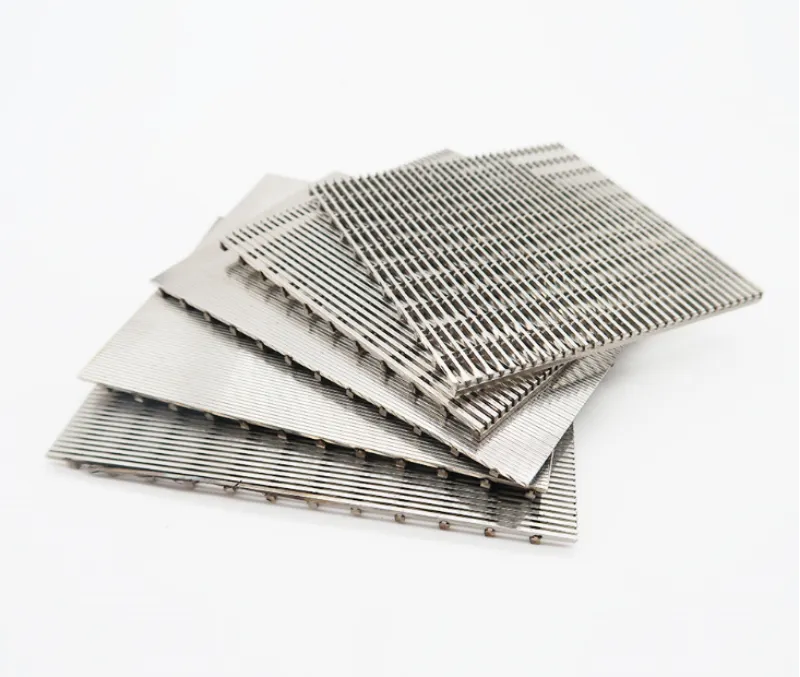
What Each Treatment Solves
Polishing or electropolishing lowers surface roughness. It clears away tiny anchor points. This stops sticky solids, fibers, oils, and biological deposits from gathering. Users pick this to make cleaning simpler. It also slows down fouling.
Pickling strips off weld heat tint and oxide scale. It removes embedded iron and shop dirt. This step matters heavily after welding. Otherwise, untreated heated zones will rust early.
Passivation builds a pure, chromium-rich shield on stainless steel. It fights corrosion in water treatment and chemical processing. It handles chlorides well. Still, you must pair it with correct alloy selection.
Combined sequences. may provide the best result. Polishing plus passivation can improve cleanability and surface stability. Pickling plus passivation is commonly used for welded screens in corrosive service. Where both fouling and corrosion are present, Jingzhou Metal can define a controlled polishing, pickling, and passivation sequence.
Application-Matched Surface Treatment
| Operating condition | Typical customer pain | Matched Jingzhou Metal strategy |
| Water treatment and wastewater | Biofouling, suspended-solids buildup, rising pressure drop, or poor backwash recovery | Polishing with passivation; add pickling and passivation for welded screens exposed to chlorides or aggressive water chemistry. |
| Food, beverage, and sanitary filtration | Product hold-up, sticky residue, long cleaning cycles, or hygiene concerns | Fine polishing or electropolishing, smooth weld transitions, and passivation coordinated with the customer’s CIP method. |
| Petrochemical and chemical processing | Pitting near welds, chemical attack, crystallization, viscous deposits, or unstable throughput | Select the alloy for the medium first, then specify pickling and passivation; add polishing where fouling is also a risk. |
| Pulp, fiber, mining, and high-solids duties | Fiber bridging, particle lodging, abrasive buildup, or progressive flow loss | Controlled polishing integrated with the correct slot, profile wire, support spacing, open area, and flow direction. |
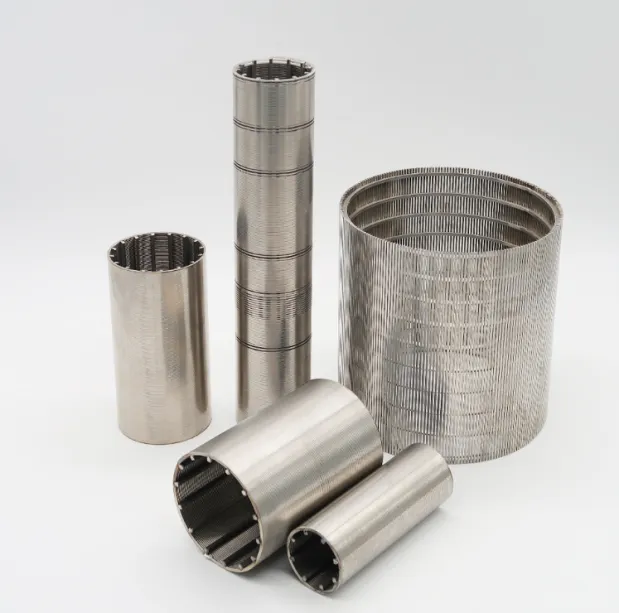
Jingzhou Metal’s Differentiated Approach
Jingzhou Metal can develop a solution from drawings, samples, equipment interfaces, or operating data. Material, V-wire and support-rod dimensions, slot opening, screen form, connection details, flow direction, and post-treatment can be customized as one engineering package.
Production and inspection are controlled within an integrated manufacturing system. Alloy composition, tensile performance, wire dimensions, and tolerances are checked with spectrometer analysis, tensile testing, infrared inspection, and 1D/2D projection instruments. This reduces the risk of separating screen design from surface treatment and helps customers address the actual cause of blockage, corrosion, and flow decay rather than applying a generic finish.
FAQ
Q1. Our slot size is correct, so why does the screen still clog quickly?
A. Correct slot size cannot prevent adhesion on a rough or contaminated surface. Jingzhou Metal reviews particle shape, viscosity, solids loading, flow direction, and cleaning method, then evaluates polishing or electropolishing together with geometry changes.
Q2. Why is corrosion concentrated around welds?
A. Weld heat tint, free iron, an incomplete passive layer, or an unsuitable alloy can create vulnerable areas. Jingzhou Metal matches material selection with pickling and passivation instead of treating passivation as a stand-alone cure.
Q3. Can surface treatment slow flow-rate decay between cleaning cycles?
A. Yes, when fouling or surface instability is a major cause. A smoother surface can reduce buildup, while correct chemical treatment can improve corrosion resistance. Jingzhou Metal also checks open area, slot profile, support spacing, and flow direction because surface treatment alone cannot correct an unsuitable screen design.
Q4. Can one screen receive polishing, pickling, and passivation?
A. Yes, when the sequence suits the material and operating condition. Jingzhou Metal defines the order and process controls according to the customer’s medium, cleanliness target, corrosion risk, and expected service life.
Q5. What information is needed for a customized recommendation?
A. Provide the medium composition, particle size, solids concentration, pH, chloride level, operating temperature and pressure, target flow, cleaning method, drawings, and current failure symptoms. These inputs allow Jingzhou Metal to propose a matched surface-treatment and screen-design solution.