


High tensile stainless steel wire tackles constant stress, vibration, heat, and corrosive media. Alloy, drawing schedule, and inspection decide its success in screens, springs, mesh, fasteners, medical tools, and aerospace parts.
What Makes High Tensile Stainless Steel Wire Durable?
Grade and profile dictate load capacity. They also define chemical resistance. Align these with the service medium before choosing a diameter or slot opening.
Durability starts with metallurgy and forming. Austenitic grades offer toughness and weldability. Duplex grades boost strength and chloride stress-corrosion resistance. A V-shaped profile distributes contact loads. It forms a precise, controlled filtration gap.
Alloy Selection for Load and Corrosion
SS304 suits general service. SS316 adds molybdenum for chloride and seawater exposure. SS316L lowers carbon for welded assemblies, while SS321 uses titanium stabilization at high operating temperatures. Duplex 2205 and super duplex 2507 support high loads in oil, gas and chemical equipment.
Nickel-Based Alloys for Heat and Aggressive Media
Nickel-based wire extends the selection range when the operating envelope includes high temperature, concentrated chemicals, nuclear-water service or sustained mechanical load. Inconel 600 fits general corrosion and heat-treatment duties; Inconel 601 fits oxidation and carburization in furnace atmospheres; Inconel 625 fits chloride, pitting and crevice-corrosion exposure; Inconel 690 fits high-temperature water; Inconel 718 and X-750 fit loaded parts that retain strength at temperature; C-276 fits wet corrosion and scrubber service.
Use the grade, temperature, atmosphere, fluid chemistry, stress pattern and cleaning cycle together. A diameter or slot opening selected from load alone can produce the wrong open area, weld fit or corrosion margin.
| Grade | Key Composition or Feature | Typical Durability Use |
| SS304 | Cr >=18%, Ni about 8%; balanced corrosion resistance | Water, food, general filtration |
| SS316/316L | Mo addition; 316L low-carbon weldability | Chloride liquids, chemical and marine service |
| SS321 | Titanium-stabilized austenitic grade | Components exposed to high operating temperatures |
| 2205 Duplex | Two-phase structure, Cr 18%-28%, Mo 2%-3% | Oil, gas and chloride stress-corrosion service |
| Inconel 600 | Nickel-chromium alloy with resistance to chloride and alkaline media | Chemical processing, heat treatment, nuclear equipment |
| Inconel 601 | Nickel-chromium alloy for high-temperature oxidation and carburization service | Industrial furnaces, heat-treatment fixtures, petrochemical equipment |
| Inconel 625 | Nickel-chromium-molybdenum-niobium alloy for pitting, crevice corrosion and high strength | Chemical, oil and gas, marine and aerospace equipment |
| Inconel 690 | High-chromium nickel alloy for corrosion resistance in high-temperature water | Nuclear heat-transfer and steam-generator components |
| Inconel 718 | Precipitation-hardened nickel alloy with high strength and fatigue resistance | Aerospace, gas turbines and high-load fasteners |
| Inconel X-750 | Precipitation-hardened nickel alloy for long-term high-temperature strength | Springs, engine components and nuclear components |
| C-276 | Nickel-molybdenum-chromium alloy for wet corrosion service | Scrubbers, acid processing and chemical filtration |
Profile Geometry Controls Stress
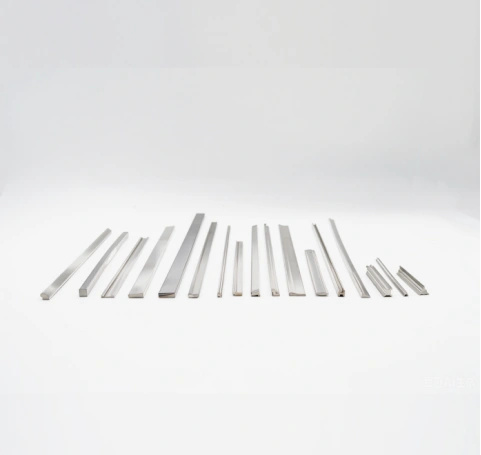
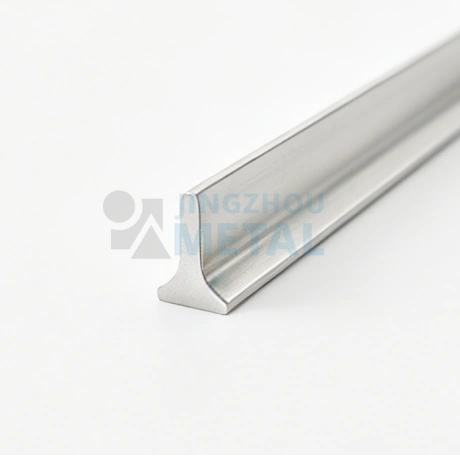
Round wire fits springs, fasteners and mesh. Flat, square, triangular and wedge profiles place material at contact points. A V-shaped nose forms continuous slots between profiles and support rods for flow, backwashing and particle release.
How Does Processing Raise Tensile Performance?
Alloy selection sets the potential; drawing and heat treatment set tensile strength, ductility and geometry.
Controlled Drawing and Annealing
Wire rod enters as coil stock. Cold drawing reduces diameter and raises strength and accuracy. Annealing relieves stress and restores ductility. Shaped rolling forms flat, square, triangular or wedge sections; fine drawing sets dimensions and surface finish.
Inspection That Protects Service Life
Tensile testing records maximum stress before fracture. Optical projectors check profile dimensions. Infrared detection monitors full-coil runout; manual checks identify scratches, deformation, discoloration, fins and missing material. Staff record appearance and dimensions each hour, with a documented 150 tension setting.
| Control Point | Recorded Value or Range | Equipment or Method |
| Profile-wire dimensional tolerance | +/-0.01 mm | 1D/2D projector, gauges |
| Wedge-wire material options | SS304, SS316, SS316L, SS321 | Material verification |
| Wedge-wire size range | 0.5 x 1.0 to 5.0 x 10.0 mm | Die and profile inspection |
| Wedge-screen slot opening | 0.02-5 mm | Slot measurement |
| Wedge-screen width and length | 25-1200 mm; up to 6 m | Assembly inspection |
Where Does High Tensile Wire Extend Equipment Life?
The same wire can behave differently in a spring, a screen or a medical component because each application applies a different stress pattern. Use the operating load, fluid chemistry, temperature and cleaning cycle to select the structure.
Grade, profile and opening should match load, temperature, chemistry and cleaning.
Filtration and Separation Equipment
Wedge-wire screens use parallel V-profiles welded to support rods in water intakes, wastewater units, mining screens, oil and gas separators, brewery filters and pulp equipment. The continuous slot carries flow; the wedge nose supports backwashing. A 0.02-5 mm slot range sets particle retention.
Nickel-Alloy Wedge Wire for Heat and Corrosive Streams
Nickel-alloy wedge-wire screens, screen cylinders, supports and catalyst structures serve distinct operating conditions. Inconel 600 and 601 suit furnace internals, heat-treatment equipment and catalyst supports. Inconel 625 suits oil and gas separation, mining and corrosive process streams. C-276 suits wet scrubbers, acid processing and corrosion-resistant filter elements. Inconel 690 suits high-temperature water and nuclear-related equipment when the design and certification requirements call for it.
For a nickel-alloy screen, release the alloy grade, slot opening, profile size, support-rod layout, operating temperature, fluid chemistry, backwash cycle and required inspection documents with the drawing. These fields connect material selection to flow, particle retention and service load.
Springs, Mesh and Precision Parts
High tensile round wire maintains spring force through repeated compression. Profile wire suits clips, fasteners and automotive parts. Fine wires form mesh, zipper teeth, eyeglass parts, medical instruments and aerospace fittings that require corrosion resistance and dimensional repeatability.
What Supplier Controls Protect Equipment Durability?
Specification quality matters when a replacement screen or formed part must fit an existing assembly. A supplier should connect grade, profile, tolerance and inspection records to the drawing you release, then keep those controls through production.
Nickel-alloy orders also need heat-number traceability, chemical-composition results, tensile data, dimensional records and surface-condition requirements. For furnace, nuclear or chemical service, define the atmosphere or fluid, temperature range, pressure, cleaning method and acceptance criteria before a sample is approved.
Jingzhou Metal develops CAD-based custom shapes through its mold and R&D team, with new-profile development in 7–15 days. Its wedge-wire product range covers SS304, SS316 and SS316L, as well as nickel-based Inconel 600, 601 and 625 for high-temperature and corrosion-resistant applications. The wedge-wire line offers sizes from 0.5 x 1.0 to 5.0 x 10.0 mm, +/-0.01 mm tolerance and a monthly capacity of 1200 tons. Infrared, tensile and optical inspection cover drawing through packaging. See the wedge wire product range and Jingzhou Metal contact details.
FAQ
Q1: Which grade suits chloride-rich water?
A: SS316L is a common choice; duplex 2205 or 2507 fits higher mechanical loads and chloride stress-corrosion exposure.
Q2: Does a larger wire diameter always improve durability?
A: It raises section strength, but it also reduces open area or filtration aperture. Select diameter with slot size, flow and load data together.
Q3: What does +/-0.01 mm tolerance protect?
A: It keeps profile dimensions consistent, which supports stable weld fit, slot width and replacement interchangeability.
Q4: How do you verify a full coil?
A: Infrared detection tracks runout; operators add appearance checks, hourly sampling and tensile or dimensional tests.
Q5: Can wedge wire be supplied for a new screen design?
A: Yes. Provide the CAD drawing, grade, profile, support-rod layout, slot opening, width and length; the R&D team can develop a matching die and sample.
Q6: Which nickel alloy fits a high-temperature furnace screen or support?
A: Inconel 601 fits furnace and heat-treatment service where oxidation and carburization matter. Inconel 600 covers general high-temperature corrosion duties. Confirm atmosphere, temperature and load before choosing.
Q7: Which nickel alloy fits wet scrubber or acid-processing filtration?
A: C-276 fits wet corrosion, scrubbers and acid-processing equipment. Inconel 625 fits corrosive oil, gas, mining and chemical service. Confirm the specific medium, concentration, temperature and cleaning cycle with the material certificate requirements.
Q8: Can the same high-tensile wire specification cover stainless steel and Inconel?
A: The drawing should identify the alloy family and grade separately. Keep profile, slot, support-rod layout, tensile target and inspection plan tied to the selected alloy because forming response and corrosion performance vary by grade.