


When wastewater, juice, wash water or mineral slurry carries suspended solids, a static sieve screen provides gravity-fed screening. Its profiled plate holds solids while liquid drains through controlled slots. Here is how to specify wedge wire.
What Is a Static Sieve Screen?
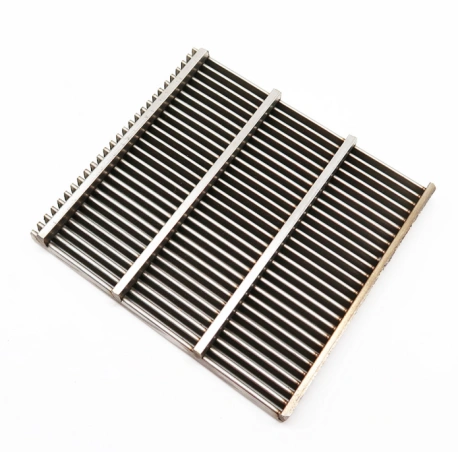
A static sieve screen is a stationary static screen for solid liquid separation. A frame supports a slotted plate, gravity moves liquid across it, and retained material travels toward discharge. It suits industrial wastewater screening, municipal wastewater screening and compact front-end solids removal.
How the Coandă Effect Works
The Coandă effect screen uses rounded triangular bars. Liquid follows the triangular profile wire, passes through the slot and leaves solids on the face. The Coandă effect in static screening creates feed distribution, drainage and solids deceleration. A continuous slot wedge wire screen keeps the opening along the wire length.
Why the Screen Plate Matters
The screen plate combines V-shaped wire, support rods, a feed edge and a discharge edge. Wave-shaped bars create a self-cleaning screen action as solids move down the surface. The wedge wire screen structure supports inspection for fouling and wear.
How Does the Structure Improve Separation?
The unit works through geometry, head and feed distribution. The frame spreads flow across the working width, and the base receives filtered liquid. This no moving parts screen design runs by gravity without a drive motor.
Screen Plate, Frame and Base
The screen frame supports the inclined plate. The screen base collects liquid and connects to the next process stage. Correct alignment keeps the feed film even. These points form the core static screen installation requirements.
Slot Opening and Capacity
Choose the screen slot opening from the target particle cut point, viscosity and suspended solids concentration. The reference values below show static sieve screen flow capacity and screening capacity m3/h for municipal effluent containing up to 200 mg/L suspended solids.
| Screen width | 0.25 mm slot opening | 0.50 mm slot opening | 0.75 mm slot opening | 1.00 mm slot opening | 1.50 mm slot opening |
| 24 in | 40 | 45 | 55 | 65 | 75 |
| 48 in | 80 | 90 | 110 | 125 | 150 |
| 72 in | 120 | 140 | 170 | 195 | 230 |
The table gives flow capacity of static sieve screen in m³/h. Final static screen slot opening selection needs flow range, solids loading, particle size, temperature and chemistry. Screen capacity based on suspended solids equals flow × concentration ÷ 1,000 for kg/h.
Where Can You Use a Static Sieve Screen?
Select by liquid properties, solids shape and cleaning method.
Water and Wastewater
For water treatment screening, the unit can handle domestic sewage, storm water, filter backwash and industrial intake water. A wedge wire screen for wastewater treatment removes screenings before treatment or reuse. Check peak flow and solids profile before sizing.
Food, Oil and Gas, Mining, and Pulp
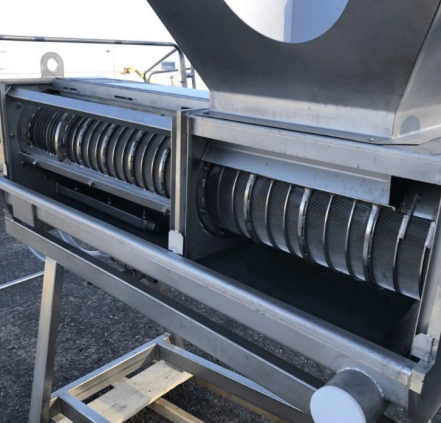
In food processing solid-liquid separation, the screen removes pulp, yeast or sediment from juice, breweries and dairies. A stainless steel wedge wire screen for food processing needs cleanable welds and drainable surfaces. Oil and gas filtration, mining slurry separation and paper and pulp filtration require review of chloride, abrasion, fiber length and solids loading.
How Do You Select and Maintain One?
A static screen maintenance checklist protects throughput after commissioning.
Process Data and Maintenance
Record average and peak flow, particle-size distribution, suspended solids concentration, head, pH, temperature, viscosity and discharge method. Inspect the feed edge, slot surface and liquid outlet. Remove fibrous wrapping and deposits with the approved wash or brush method, then log head, flow and cleaning interval.
Material and Quality Control
Common stainless steel wedge wire grades include SS304, SS316 and SS316L. The range also covers SS321 and special alloys for defined chemical duties. Wedge wire sizes include 1.50–3.70 mm examples, slots from 0.02–5 mm, lengths up to 6 m and widths of 25–1,200 mm. Wire tolerance can reach ±0.01 mm.
How Can Technical Wire Capability Support Your Screen Design?
The screen surface sets the cut point, so wire control affects separation. Jingzhou Metal develops shaped wire through wire-rod preparation, cold drawing, annealing, shaped rolling and fine drawing.
Its stainless steel profile wire manufacturer capability covers triangular, wedge, flat and custom profiles. Infrared monitoring, 1D/2D projection, tensile testing and spectrometer checks verify drawing control. The wedge wire screen filter range supports a custom wedge wire screen supplier review using slot, width, length and material data.
FAQ
Q1: How does a static sieve screen work?
A: Liquid follows rounded triangular bars, drains through slots and carries retained solids down the face.
Q2: What is the useful slot range?
A: Wedge wire products cover 0.02–5 mm openings. Process cut point and liquid properties set the value.
Q3: Can one screen handle food and industrial streams?
A: Yes. Match material, weld quality, cleanability and drainage to the duty.
Q4: What does the supplier need for sizing?
A: Flow, suspended solids concentration, particle size, slot opening, head, chemistry, temperature, dimensions and cleaning method.
Q5: Which data confirms fabrication quality?
A: Dimensional records, infrared monitoring, projection measurements, tensile results, material analysis and weld inspection provide traceability.