


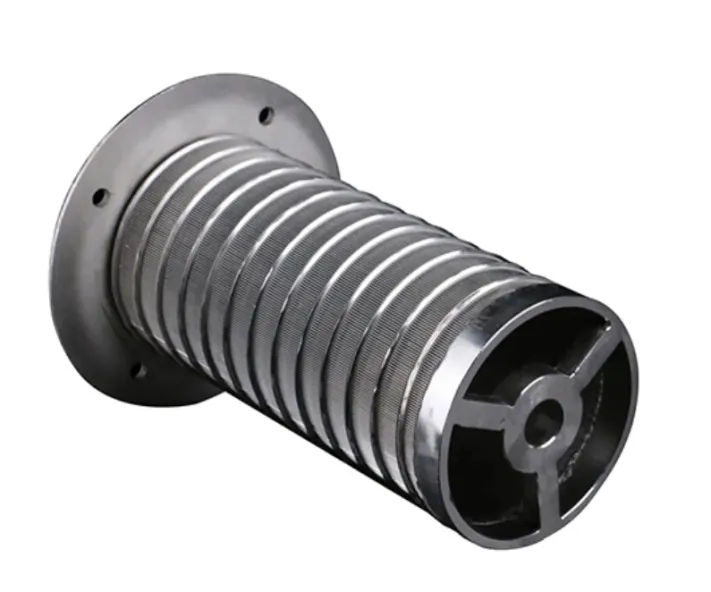
A wedge wire screen is a process component, not a catalogue commodity. Material grade and nominal slot width matter, but they do not define hydraulic capacity, solids retention, resistance to backwash, cleanability, or fit with the host equipment. The safest specification links the process medium, particle geometry, flow duty, structural load, cleaning method, and acceptance evidence.
Mistake 1: Treating Wedge Wire as Woven Mesh
Woven mesh is normally described by mesh count, weave, and wire diameter. Wedge wire is different: V-shaped profile wires are welded to support rods to create continuous slots. Performance therefore changes with profile geometry, support spacing, weld pitch, flow direction, and differential pressure. The drawing should identify the screen form—flat panel, curved panel, cylinder, basket, tube, or nozzle—and the equipment interface.
Site scenario—wastewater intake. Fibrous solids can align with an opening and wrap around cross wires. Replacing a continuous-slot screen with an “equivalent mesh count” may increase blinding even when the apparent opening size looks similar.
Mistake 2: Selecting the Slot from Average Particle Size
The average particle size is rarely the controlling dimension. Flakes, husks, crystals, fibers, and elongated particles may pass edge-first through a slot. Before fixing the opening, review:
- the full particle-size distribution, not only D50;
- particle shape and compressibility;
- the maximum solids carryover the downstream process can tolerate.
Brewery example. Husk thickness may control retention more than husk length. When morphology varies by raw-material batch, a bench test or first-article trial is more reliable than selecting a slot from a single laboratory average.
Mistake 3: Making the Slot Smaller Without Checking Open Area
A finer slot can improve retention, but it can also reduce effective open area, increase local velocity, raise pressure loss, and shorten the interval between cleaning cycles. Two screens with the same slot may deliver different capacity because the profile-wire back width and support arrangement are different.
Mining dewatering scenario. Simply reducing the opening may starve the downstream pump or leave excess moisture in the product. A better solution may be a larger screen area, a revised wire profile, or a different panel angle—not necessarily a wider slot.
Mistake 4: Ignoring Flow Direction and Reverse Loading
A cylindrical screen should be treated as a pressure-bearing assembly. Outside-to-inside and inside-to-outside flow place different stresses on the profile wires, supports, welds, flange, and unsupported span. The specification must state normal differential pressure, maximum upset pressure, reverse-cleaning pressure, vibration, and permitted deformation.
Commissioning failure mode. A self-cleaning cylinder operates correctly during filtration but ovalizes during a short backwash pulse because reverse pressure was never included in the design basis. The slot remains accurate, yet the screen no longer fits the scraper or housing.
Mistake 5: Writing Only “Stainless Steel”
Grade selection must follow the actual chemistry. Record chloride concentration, pH, operating temperature, cleaning chemicals, weld exposure, and abrasive solids. 304/304L is suitable for many general services; 316/316L is commonly selected where chloride exposure is more demanding. Duplex or higher alloys require a project-specific compatibility review.
Corrosion scenario. A low-cost 304 screen in warm, chloride-bearing process water can develop pitting long before the mechanical structure wears out. Require material certificates and, for critical batches, spectrometer verification rather than relying on a generic “stainless” label.
Mistake 6: Confusing Surface Finish with Surface Treatment
“Smooth” and “polished” are not measurable acceptance criteria. Specify the required Ra value, the treatment method, the wetted-surface scope, edge condition, and inspection method. Pickling and passivation restore corrosion-resistant surface condition after fabrication; mechanical polishing or electropolishing may be needed for hygienic service. In beverage or food equipment, this distinction affects residue release, cleaning validation, and cross-contamination risk.
Mistake 7: Ordering Without a Drawing and Acceptance Plan
A complete RFQ should define medium, solids concentration, viscosity, flow rate, temperature, chemistry, slot and tolerance, effective area, flow direction, pressure limits, cleaning method, dimensions, connections, quantity, and documentation. For a new OEM interface, approve a first article before serial production. Inspection should cover slot measurements, roundness or flatness, flange geometry, material grade, weld integrity, surface condition, and drawing revision.
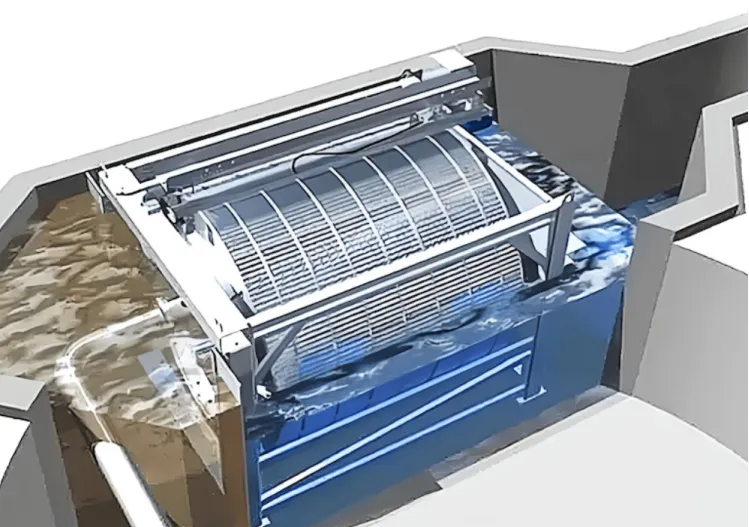
Jingzhou Metal Manufacturing Advantages
Jingzhou Metal handles profile-wire production alongside mold development. They also manage dimensional control and finished-screen fabrication. Opened in 2009, the firm currently runs three production bases across roughly 18,000 m².
Their quality gear includes infrared monitoring, projectors, tensile testing, spectrometer alloy verification, plus in-house mold repair. This setup directly drives drawing-based OEM/ODM work and prototype validation. Finally, it secures steady repeat production under ISO 9001 quality management.
Conclusion
Correct selection balances separation efficiency, hydraulic capacity, mechanical strength, corrosion resistance, cleanability, and verification. A controlled drawing and a realistic design basis usually prevent more cost than a late change during commissioning.
FAQ
Q: What dimensional range can be customized?
A: Published Jingzhou product data includes slot openings from 0.1 to 10 mm,Minimum filtration precision up to 20 micron(0.02 mm), and Aperture ratio from 15% to 65%, with other sizes available by project review. These are manufacturing envelopes, not proof that every combination will meet the same pressure or open-area requirement.
Q: When should a pilot test be required?
A: Use a trial when particles are fibrous, compressible, sticky, or highly variable; when filtrate clarity has a tight limit; or when a new cleaning chemistry is introduced. Record throughput, pressure loss, carryover, and cleaning recovery rather than judging only the first clean-screen result.
Q: How should competing quotations be compared?
A: Compare effective screening area, slot tolerance, profile and support sections, pressure rating, material traceability, surface treatment, inspection records, and included end fittings. Price per kilogram can be misleading because a heavier screen is not automatically stronger or more efficient.
Q: What should be retained for repeat orders?
A: Keep the approved drawing revision, first-article report, material certificate, slot-inspection record, surface-treatment record, and photographs of connection details. These documents reduce variation when the same screen is reordered months or years later.