

Where Do Municipal Plants Use Wedge Wire Screens?
Municipal treatment lines handle leaves, grit, fibers, screenings, and biological solids. A continuous-slot wedge wire screen gives a defined opening, rigid support, and a surface that sheds solids during flow. It serves intake and pretreatment equipment.
Intake and Pretreatment Channels
At a river or reservoir intake, a coarse stainless steel wedge wire screen protects pumps and downstream fine screens. Slot width follows the pump manufacturer’s maximum particle size.
Sidehill Screening for Wastewater Solids
Sidehill screens use gravity and approach velocity along an inclined panel. Wastewater passes through the slots while screenings slide toward collection. Screen angle and flow depth need hydraulic checks before selection.
How Does the V-Shaped Slot Control Filtration?
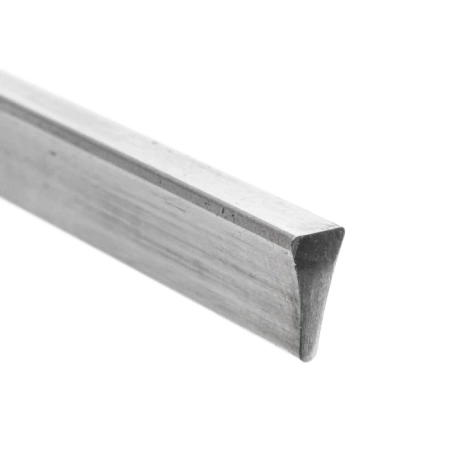
The V profile creates a narrow opening at the water-facing surface and a wider passage below. Particles contact the slot edge, while the expanding channel limits bridging and supports backwash or brushing.
Profile Wire and Support Rod Geometry
Wedge wire forms the filtration surface; longitudinal or transverse support rods carry the hydraulic and mechanical load. The profile can be welded as a flat panel, cylinder, basket, or underdrain module. The V-shaped profile wire also works as a support rod in some screen assemblies.
Slot Opening, Open Area, and Headloss
Reference filter-mesh data places open area around 20%–80%. Municipal wedge wire uses a specified slot in micrometers or millimeters. A 0.5 mm slot captures finer solids than a 2.0 mm slot and creates higher clean-screen headloss. Confirm peak flow, allowable headloss, solids type, and cleaning method together.
Which Materials and Parameters Should You Specify?
Material selection follows chloride level, cleaning chemistry, temperature, weld exposure, and budget. 304 stainless steel suits many general water duties. 316 and 316L add molybdenum for stronger chloride resistance; 316L also limits carbon at welded joints. Review the wedge wire product range when you need a custom profile or alloy.
Choosing 304, 316, or 316L Stainless Steel
Use 304 for inland raw water with moderate chloride. Consider 316 for coastal intakes or brackish wastewater. Select 316L for extensive welding or chemical cleaning cycles. Duplex grades suit severe chloride service after a corrosion review.
Parameter Table for a Municipal Screen
| Parameter | Working Range or Option | Selection Note |
| Profile | V-shaped, triangular, wedge | Defines slot entrance and flow path |
| Wire size | 0.5×1.0 to 5×10 mm | Match load and open-area target |
| Slot opening | Project-specific, often 0.5–2.0 mm | Set from particle capture and headloss |
| Dimensional tolerance | ±0.01 mm for profile wire | Supports repeatable slot geometry |
| Material | SS304, SS316, SS316L, SS321, 809C, E300 | Base choice on chloride and welding |
| Open area | About 20%–80% reference range | Check velocity and structural strength |
| Filtration accuracy | 25–1000 μm reference range | Use tested slot data for final duty |
| Form | Flat panel, cylinder, basket, underdrain | Follow channel or vessel layout |
| Support | Welded rods, frame, flange | Size for differential pressure |
How Are Screens Manufactured and Checked?
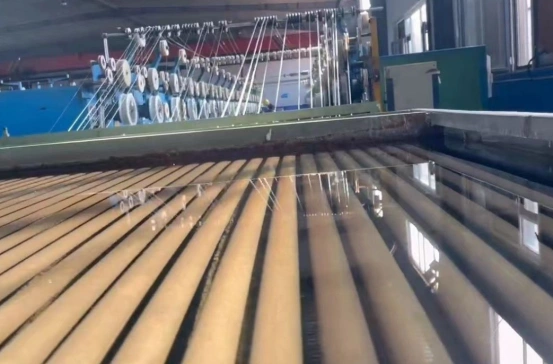
Municipal screens depend on consistent slot geometry. A controlled route starts with wire rod, cold drawing, annealing, shaped rolling, fine drawing, and packaging. Resistance welding joins profile wire to support rods; rerolling can restore circularity or panel geometry.
Forming, Welding, and Rerolling
Profile wire may use 304, 316L, 321, or engineered grades. Mold condition affects the V tip and slot. Routine mold repair keeps the profile within drawing limits. For cylinders, circumferential welding and axial rerolling improve roundness.
Dimensional and Surface Quality Checks
Infrared inspection monitors runout along the coil. Operators combine projection instruments with manual checks and record tensile results and dimensions. The supplied inspection practice calls for hourly visual checks for damage, deformation, discoloration, fins, and missing sections.
Surface brightness describes appearance; pickling, passivation, polishing, and other surface treatments describe the process used to reach a specified condition.
A Practical Supply Route for Plant Upgrades
An upgrade package should carry peak flow, slot opening, panel or cylinder dimensions, support spacing, flange details, material grade, and cleaning method.
Jingzhou Metal develops profile-wire designs from CAD drawings, reports a 7–15 day new-product cycle, and lists 1200 tons per month for wedge and triangle wire. Its technical company information describes infrared, tensile, ultrasonic, projection, and CNC inspection resources. For a retrofit, request a slot sample, weld drawing, and inspection record.
FAQ
Q1: What is a wedge wire screen used for in a municipal plant?
A: It screens raw-water debris, wastewater solids, and filter-media support flows in intake, pretreatment, sidehill, and underdrain equipment.
Q2: How do you choose the slot opening?
A: Set the opening from the target particle size, peak flow, allowable headloss, and cleaning method, then verify with hydraulic and solids-loading calculations.
Q3: Is 316L required for every wastewater screen?
A: No. 304 fits many moderate-chloride duties; 316 or 316L fits chloride-rich water, coastal service, and heavily welded assemblies.
Q4: Can wedge wire screens match an existing channel?
A: Yes. Panels, cylinders, baskets, and underdrain modules can follow supplied drawings, dimensions, flange positions, and support spacing.
Q5: Which inspection records should a buyer request?
A: Ask for material certificates, slot and profile measurements, weld inspection results, tensile data where applicable, and final visual inspection records.